
CPCB IV+ Diesel Generators: What Businesses in India Need to Know
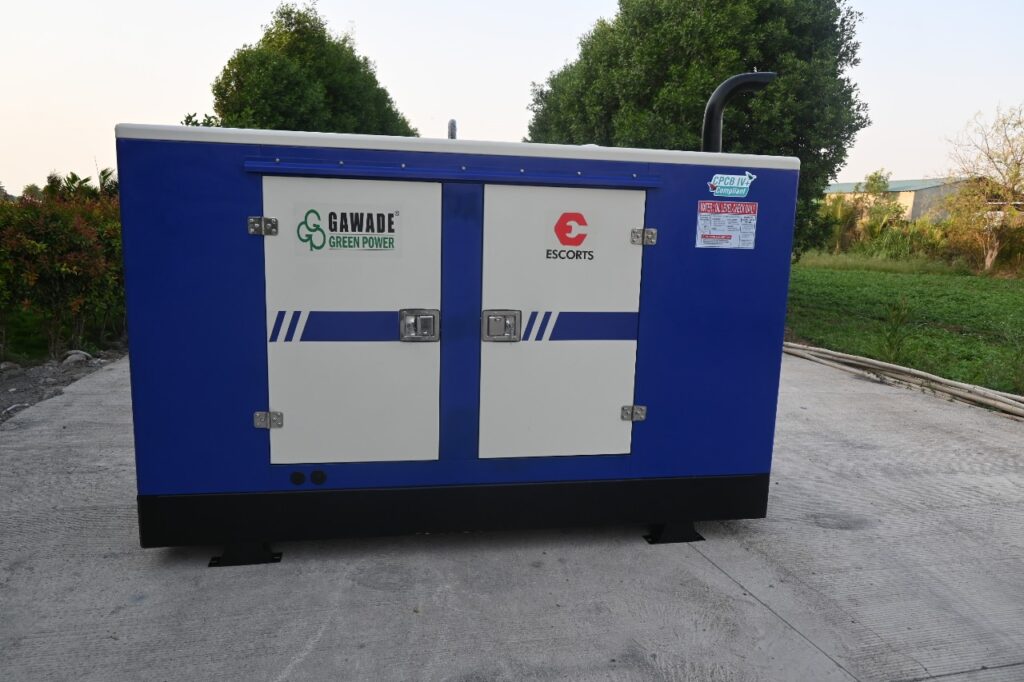
Reliable electricity is essential for modern businesses. Manufacturing plants, hospitals, commercial buildings, offices, data centres, educational institutions, hotels, warehouses, and construction sites cannot always depend entirely on the utility grid. A power interruption can affect production, equipment, customer service, safety, and revenue.
Diesel generators, commonly called DG sets, continue to be an important backup-power solution for these applications. However, choosing a generator today is not simply about selecting the required kVA capacity. Businesses must also consider emissions, efficiency, safety, noise, operating conditions, maintenance, and regulatory requirements.
This is where CPCB IV+ diesel generators become important.
CPCB has published revised requirements for new engines used in generator sets, including requirements related to emissions and compliance procedures. The current CPCB system-and-procedure documentation refers to revised emission standards notified by the Ministry of Environment, Forest and Climate Change and includes requirements concerning NOx, particulate control, diagnostics, and anti-tampering measures.
For businesses planning a new DG installation, understanding CPCB compliance can help them make a more informed purchasing decision.
What Is a CPCB IV+ Diesel Generator?
CPCB IV+ is commonly used in the Indian generator market to describe diesel generator sets designed to meet the applicable stringent emissions requirements for new gensets.
The Central Pollution Control Board plays a key role in the compliance system. The CPCB documentation describes type approval and conformity-of-production procedures for compliant genset engine models.
In simple terms, a compliant generator is designed and certified according to the applicable emissions requirements rather than simply focusing on electrical output.
For a business owner, this means the purchase decision should consider:
- Applicable emission requirements
- Type approval and conformity requirements
- Generator capacity
- Engine technology
- Fuel consumption
- Exhaust arrangement
- Acoustic requirements
- Installation conditions
- Preventive maintenance
- Availability of service and spare parts
- Environmental regulations have become increasingly important for businesses operating diesel-powered backup systems.
A generator converts mechanical energy from an engine into electrical energy. Like any combustion engine, the diesel engine produces exhaust emissions. Modern emissions-compliant technology is intended to reduce the environmental impact of generator operation while maintaining dependable power generation.
CPCB’s documentation specifically addresses emissions and compliance for genset engines and includes requirements related to particulate and NOx control.
For businesses, choosing an appropriate compliant generator can therefore provide several advantages.
1. Better Regulatory Alignment
Businesses need to consider the regulations applicable to their location and application before installing a DG set.
Selecting a generator designed for the applicable current requirements can reduce the risk of choosing outdated technology.
2. Improved Emissions Performance
Modern gensets incorporate engine and emissions-control technologies designed to meet applicable limits.
This is particularly relevant for businesses operating in urban and industrial areas where environmental considerations are increasingly important.
3. Modern Engine Technology
Newer generator platforms may incorporate advanced injection, electronic controls, monitoring systems, and improved combustion technology.
These technologies can help improve operational control and efficiency.
4. Better Monitoring
Modern DG sets can provide more information about operating conditions, alarms, load, temperature, oil pressure, and other parameters.
This information can support preventive maintenance and quicker troubleshooting.
What Are the Benefits of a CPCB IV+ Diesel Generator?
Reliable Backup Power
The primary purpose of a DG set is to provide electricity when the main supply is unavailable or insufficient.
A correctly selected and maintained generator can help businesses continue essential operations during interruptions.
Fuel Efficiency
Fuel consumption is one of the biggest operating costs associated with diesel generators.
Engine technology, load profile, maintenance, operating hours, and generator sizing all influence fuel consumption. Therefore, businesses should not compare generators only by purchase price.
Lower Environmental Impact
A generator meeting applicable emissions requirements is better suited to businesses that want to operate modern power-backup equipment while considering environmental compliance.
Reduced Downtime Risk
A reliable generator can help protect critical systems from unplanned power interruptions.
This is especially important for:
- Hospitals
- Manufacturing units
- IT facilities
- Data centres
- Commercial buildings
- Hotels
- Warehouses
- Construction projects
- Educational institutions
Where Can CPCB IV+ Diesel Generators Be Used?
CPCB-compliant DG sets can be used across a wide variety of applications, subject to the specific requirements of the installation.
Industrial Applications
Factories and manufacturing facilities often depend on uninterrupted electricity for production machinery, automation systems, lighting, ventilation, and safety equipment.
Commercial Buildings
Offices, malls, retail stores, and business centres use generators to maintain essential services during outages.
Hospitals
Hospitals have critical electrical loads such as medical equipment, emergency systems, lighting, HVAC, and communication systems.
Hotels
Hotels need reliable electricity for guest rooms, elevators, kitchens, security systems, lighting, and HVAC.
Construction Sites
Construction sites may not have reliable grid power at every stage of development. Portable or appropriately configured generators can provide temporary power.
Educational Institutions
Schools, colleges, training centres, and campuses can use backup power for classrooms, laboratories, administration, networking, and security systems.
How to Choose the Right CPCB IV+ Generator
Buying a generator should begin with a detailed load assessment.
Step 1: Calculate Your Connected Load
Prepare a list of all equipment that needs backup power.
Include:
- Motors
- Pumps
- Compressors
- HVAC systems
- Lighting
- Computers
- Servers
- Medical equipment
- Production machinery
- Security systems
Step 2: Identify Starting Loads
Motor-driven equipment can demand significantly more current during startup than during normal operation. Caterpillar’s generator-sizing guidance notes that motors can draw several times their normal running current during starting.
Therefore, simply adding running loads may not produce an appropriate DG size.
Step 3: Determine Required kVA
The generator should be selected according to the actual electrical characteristics of the site.
Oversizing can increase capital cost and may result in inefficient operation at very low loads, while undersizing can cause overloads and voltage/frequency problems.
Step 4: Consider Future Expansion
If the business expects to add machinery, HVAC systems, production lines, or other loads, future requirements should be considered.
Step 5: Evaluate Service Support
A generator is a long-term asset. Service response, spare-parts availability, preventive maintenance, and technical support are important.
Why Choose Gawade Green Power?
Gawade Green Power provides generator sales, rental, maintenance, and power solutions for industrial, commercial, residential, and critical applications. The company states that it serves applications including industrial units, commercial facilities, hospitals, data centres, IT floors, government projects, and other infrastructure.
Its website also identifies Escorts Kubota and Kohler among its generator equipment partners and highlights generator technology, service support, and 24/7 emergency assistance.
For businesses looking for a generator, the right solution should be based on:
- Actual electrical load
- Application
- Required backup duration
- Installation location
- Emission requirements
- Acoustic requirements
- Budget
- Service requirements
Frequently Asked Questions
CPCB IV+ is commonly used in India’s genset market to
identify generators designed around the applicable stringent emissions
requirements for new generator sets. CPCB’s current documentation describes
revised emission standards and compliance procedures for gensets.
2. Are CPCB IV+ generators suitable for industries?
Yes, appropriately sized and configured CPCB-compliant
generators can be used for industrial applications. The correct capacity should
be determined through a professional load assessment.
3.Are CPCB IV+ generators fuel efficient?
Fuel consumption depends on the engine, load, operating
conditions, maintenance, and generator configuration. Modern generator
technology can provide improved efficiency, but businesses should evaluate
actual fuel-consumption specifications for the specific model.
4. How do I select the right generator capacity?
Start with a complete load calculation and identify motor starting requirements. A professional generator supplier can then recommend the appropriate kVA rating
5.Does Gawade Green Power provide generator service?
Gawade Green Power states that it provides generator maintenance and service support as part of its power solutions.
6.Need a CPCB IV+ diesel generator for your business?
Contact Gawade Green Power for professional generator selection, sales, rental, installation support, and maintenance solutions.
Get the right power solution for your application—contact Gawade Green Power today for a customized quotation.